Face rent is not the concession story
How does free rent affect occupancy cost for tenants? Teams celebrate three months free on the cover slide and skip the recovery lines that still print in month one. Free rent is a timing concession on base rent (or sometimes additional rent), not a blank check on operating expenses. Occupancy cost is rent plus recoveries and tenant-paid lines on the same timeline—so abatement months change which cells are zero, not whether CAM belongs in the model.
Read the abatement article: which months base rent is zero or reduced, whether percentage rent abates, and whether the clock starts at lease signing or occupancy. Partial abatement—half rent for six months—is still free rent economics; it just spreads the concession. Gross leases may bundle recoveries, but abatement language still matters when the landlord reconciles expenses later.
What free rent actually abates
CAM during abatement is the surprise line. Many leases abate base rent but not CAM, tax, or insurance. Example: 10,000 rentable square feet, $36 base rent, $9 CAM estimate, three months free on base rent only—year-one occupancy cash is about nine months at $36 plus twelve months at $9 per square foot, roughly $378,000 of rent plus $108,000 of CAM before TI. A team that budgeted only the abatement headline underfunds year one.
CAM during abatement is the surprise line
Tenant improvement allowance is separate economics. $45 per square foot TI on 10,000 rentable square feet is $450,000 of upfront tenant-side cash (or landlord delivery credit, depending on structure). Free rent changes operating cash; TI changes capital cash. Do not net them into one smooth effective rent number until both are labeled on the occupancy-cost table.
Tenant improvement versus free rent on year-one cash
Net effective rent is a summary metric, not a substitute for a timeline. Spread total rent over the term only after you include abatement months, escalations, and recoveries. A lower net effective rent with shorter free rent and higher CAM can lose to a higher face rent with longer abatement once paths are discounted— that is an occupancy-cost NPV question, not a slogan on a broker flyer.
Net effective rent without hiding recoveries
Compare two proposals with labeled abatement months: Proposal A offers $34 base rent, $8 CAM, two months free on base rent only, $30 TI PSF, five years. Proposal B offers $32 base rent, $9 CAM, four months free on base rent only, $15 TI PSF, five years. Year-one occupancy cash on A is roughly ten months of rent plus twelve months of CAM; on B, eight months of rent plus twelve months of CAM—but B’s higher CAM and lower TI change both operating and upfront cash. Put both on one timeline before committee sees net effective rent alone.
Compare two proposals with labeled abatement months
Request the rent schedule showing abatement months, the CAM estimate for year one, the clause stating whether recoveries abate, and the TI allowance letter. Red flags: free rent in marketing slides with no CAM abatement language, net effective rent without a rent schedule, or concessions expiring if occupancy slips one week. This page is general information, not legal advice. Related reading: gross versus net lease structure, expense stop versus base year, what numbers you need before you compare two leases, and the compare-commercial-leases tool once your table is sourced.
Documents and red flags before you sign
Renewals often trade free rent for higher starting rent—model the flip year, not just the abatement window. Sublease and holdover can inherit abatement mechanics; read assignment clauses. Retail and industrial packages use different concession shorthand; translate each to occupancy cost before you rank finalists.
Does free rent always include CAM abatement?
No. Many leases abate base rent only; CAM, tax, and insurance may still bill during abatement months.
Should TI and free rent be netted into one number?
Not until both sit on labeled rows—TI is capital timing; free rent is operating timing on the occupancy-cost table.
Is net effective rent enough to compare leases?
Use it as a summary after you build the full timeline with recoveries and abatement months.
Related resources
CAM in the first year · Interest rates and value · Cap rate hub · Compare leases
Featured Reads

What is the difference between an expense stop and a base year for tenants?
An expense stop caps tenant recoveries at a stated level; a base year bills tenant share of operating expenses above a documented baseline year. Both change occupancy cost while face rent stays flat.
· 12 min read
[ Expense Stop ] [ Base Year ]
Read more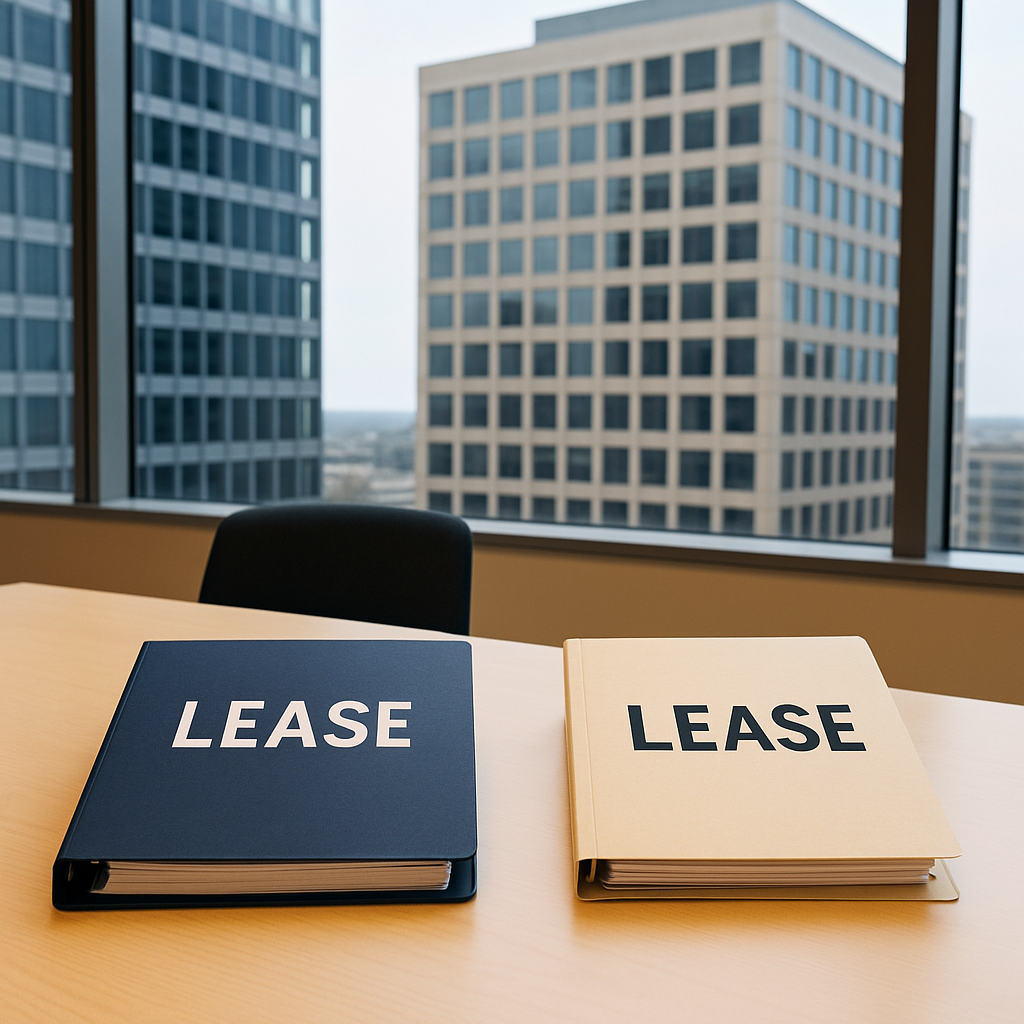
What is the difference between a gross lease and a net lease for tenants?
Gross leases bundle operating costs into the rent quote; net leases separate base rent from CAM, tax, and insurance recoveries. Compare occupancy cost, not headline rent alone.
· 14 min read
Read more
How should a tenant treat CAM in the first operating year?
Treat first-year CAM as a labeled occupancy-cost estimate, not a finished bill. Compare it on the same timeline as rent.
· 14 min read
Read more
How do you compare two commercial lease options on one timeline?
Put both occupancy-cost paths on the same years, discount them, and keep tenant NPV separate from a building cap rate.
· 11 min
Read moreWhat numbers do you need before you compare two commercial leases?
A checklist of rent, recoveries, free rent, TI, and term. Missing one line is how a cheaper face rent still loses.
· 11 min
Read more
What is occupancy cost, and how is it different from rent?
Rent is one line. Occupancy cost is rent plus the recoverable and tenant-paid operating lines on the same timeline.
· 11 min
Read more
How is cap rate calculated for a commercial building?
Cap rate is NOI divided by value or price. Name the NOI, name the price, and do not treat a tenant occupancy-cost number as a property yield.
· 11 min
Read more
How do interest rates affect commercial property values?
Financing costs change the yield buyers require. Same NOI at a higher cap rate is a lower indicated value. This is a property-valuation story, not a tenant lease NPV.
· 16 min read
[ Interest Rates ] [ Cap Rates ]
Read moreFeatured Reads
- What numbers do you need before you compare two commercial leases?
A checklist of rent, recoveries, free rent, TI, and term. Missing one line is how a cheaper face rent still loses.
- What is the difference between a gross lease and a net lease for tenants?
Gross leases bundle operating costs into the rent quote; net leases separate base rent from CAM, tax, and insurance recoveries. Compare occupancy cost, not headline rent alone.
- How do you compare two commercial lease options on one timeline?
Put both occupancy-cost paths on the same years, discount them, and keep tenant NPV separate from a building cap rate.